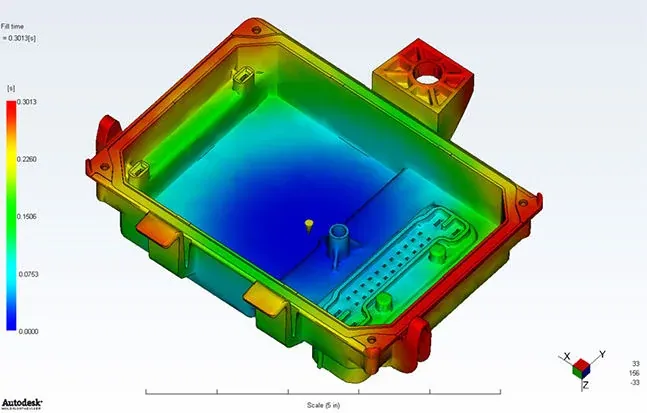
Mold flow analysis simulates how molten plastic fills, packs and cools inside a mold. It is one of the best ways to confirm a design before steel is cut, but only if the results are read correctly. A green fill plot does not guarantee a good part. BG Innovations reviews Moldflow reports and turns the results into specific, practical changes to the part and the tool.
Reading the report is the real skill
A Moldflow report can run to dozens of pages of plots: fill time, pressure, temperature, weld lines, air traps, sink estimates, cooling and deflection. Each plot depends on assumptions about material, process settings and mesh. The value comes from understanding what the results mean on a real press, and which ones actually need action.
Bob Gray has read mold flow results for decades, alongside the tools they describe. Mold builders who have worked with him point out that he knows the analysis side for understanding mold flows, which they see as a big plus.
What we review in a Moldflow report
A typical report review covers:
- Fill pattern, balance and hesitation
- Gate location, size and type
- Weld and meld lines, and their position on cosmetic or structural areas
- Air traps and venting needs
- Pressure and clamp tonnage relative to the press
- Pack, sink and volumetric shrinkage
- Cooling efficiency and hot spots
- Warp and deflection, and their root causes
- Input assumptions: material data, process settings and mesh quality
From plots to practical changes
The output of the review is a short list of clear actions. That might be moving or resizing a gate, adding venting, changing rib thickness, rebalancing the runner, adding or relocating cooling, or adjusting wall thickness. Each recommendation explains what the result shows, why it matters and what change will address it. The goal is a design that is ready for production, not just a report that looks good.
Warp, flatness and deflection
Warp is one of the most common reasons parts fail at T1. Deflection results can point to the cause, whether it is uneven cooling, differential shrinkage or fiber orientation. Bob reviews those results to find the root cause and recommends changes in the part, gating or cooling to bring flatness within spec before the tool is built.
When to request a review
Moldflow reviews are most useful before the mold design is released, and again whenever the part, material or gating changes. They are also valuable when a tool is already running with problems, to compare the simulation with what the press is showing and find the gap. Periodic reviews help keep performance steady as materials, presses or designs change over time.
Common mistakes in mold flow analysis
Many mold flow problems come from the inputs, not the software. Using generic material data instead of the actual grade, running the analysis with process settings that will never be used on the press, or using a coarse mesh in thin areas can all produce results that look fine and are wrong. Another common mistake is analyzing only fill, without pack, cooling and warp. Bob checks the assumptions behind the report as carefully as the results themselves, so your decisions are based on a simulation that reflects how the tool will really run.
How the engagement works
Send the Moldflow report, the part CAD and the mold design if available. Bob reviews the results remotely, writes up his findings and joins a call with you and your analyst or mold builder to agree on changes. If a second analysis run is needed after changes, he can review that as well.
If you have a Moldflow report and want to know what it really means for your tool, book a free 15-minute call with Bob.
Frequently asked questions
Do you run Moldflow simulations?
The service focuses on reviewing and interpreting analysis results prepared by your team or mold builder, and recommending changes.
Can you review results from other simulation software?
Yes. The same principles apply to fill, pack, cooling and warp results from most mold flow tools.
What if the tool is already built?
A review can still help by comparing the simulation with actual press results to find the root cause of problems.