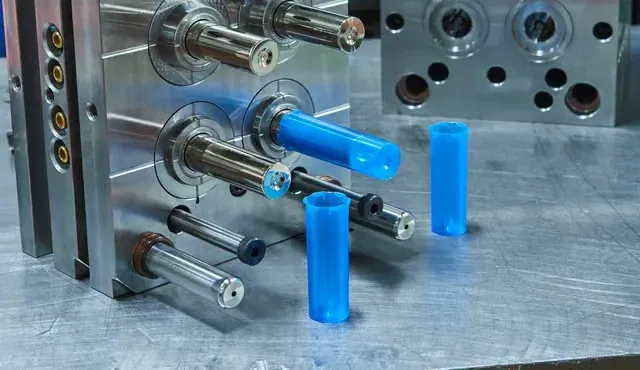
Cycle time is one of the biggest drivers of cost in injection molding. Every second saved is multiplied across every shot, every shift and every part you ship. BG Innovations works with your team to fine-tune the entire molding cycle, from fill and cooling to ejection and robot handoff, so your tools run faster without giving up part quality.
Where the seconds go
A molding cycle is made of several stages: clamp, inject, pack, cool, open, eject and the handoff to automation. Cooling is usually the largest single part, often half or more of the cycle. But real gains often come from the small things around it: slow mold movements, cautious ejection, robots waiting on the press, or extra cooling time added years ago to fix a problem that no longer exists.
Bob Gray looks at the whole cycle on the press, not just the setup sheet, to see where time is being spent and where it can be safely recovered.
What a cycle time review covers
A typical cycle time improvement engagement looks at:
- Actual cycle breakdown by stage, measured on the press
- Cooling time, mold temperature and cooling circuit performance
- Fill, pack and hold settings
- Mold open, close and ejection speeds and strokes
- Robot pick, place and timing with the press
- Part design features that slow cooling or ejection
- Tool condition, venting and maintenance issues
Mold, process and automation together
Some gains come from process settings. Others need a change to the tool, such as better cooling, added venting or improved ejection. Still others come from automation timing. Bob looks at all three together, ranks the opportunities by payback and helps your team test changes in a controlled way, so quality is protected while the cycle comes down.
Protecting part quality
Taking time out of a cycle only helps if the parts still meet spec. Faster cooling can increase warp. Faster ejection can mark parts. Bob uses decades of tooling experience to find changes that shorten the cycle while keeping dimensions, cosmetics and stability in check. Each change is verified before it becomes the new standard.
Trials and new tools
Cycle time work is also valuable at T1 and early trials, when the process is first set up. Getting the cycle right during launch avoids locking in a slow, conservative process that becomes the norm for the life of the tool. Bob can support trials on-site or review trial data remotely and suggest where time can be gained.
Common causes of long cycle times
In many plants, long cycles come from a handful of causes. Cooling lines that do not reach thick sections, so the whole part waits on one hot spot. Mold temperatures set for an old problem that was solved long ago. Hold times far longer than gate freeze requires. Conservative mold open and eject speeds. Robots that wait for full mold open before moving in. Each of these can usually be addressed with targeted changes, and together they often add up to a meaningful reduction. A structured review finds which ones apply to your tool and in what order to tackle them.
How the engagement works
The engagement starts with a free 15-minute call to understand the part, the tool and the current cycle. Bob then reviews process data, setup sheets and, where useful, visits your facility to watch the tool run. You receive a prioritized list of changes with expected impact, and support while your team puts them in place.
With more than 45 years in injection molds, Bob knows where cycle time hides. Book a free call to talk through a tool that is running slower than it should.
Frequently asked questions
How much cycle time can be saved?
It depends on the tool and process. Bob identifies the opportunities and ranks them by expected payback before any changes are made.
Do you visit the plant?
Yes, on-site visits are available, and many reviews can also start remotely with process data.
Will changes affect part quality?
Every change is checked against dimensions and cosmetics before it is adopted.