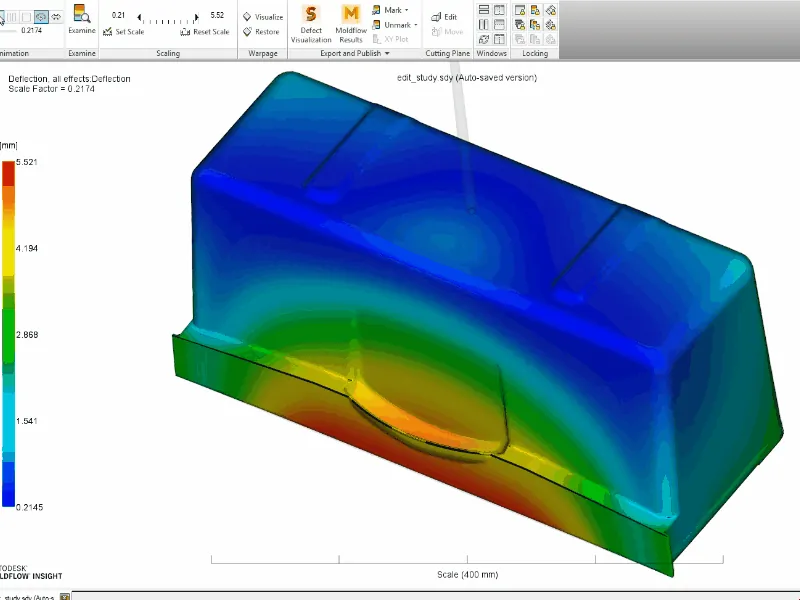
Some molding problems give way to method. You change one thing, measure the parts, and work toward the answer. Warpage is not always that kind of problem. This is the story of a part that would not mold flat, and of where the answer finally came from.
The case: a flat part that would not stay flat
Bob Gray was an engineer at an automotive OEM. A Cadillac fuse panel would not mold flat. After a week of trials with the process engineer, a large number of parts had been scrapped.
Then a retired part-time worker at the plant offered an unconventional suggestion. Bob and the process engineer tried it, and it worked. The part molded flat and scrap stopped.
Bob recommended a reward for the person whose idea solved it, and the CEO approved it. Read the full case study.
Why warpage is hard to chase
A part warps because it does not shrink evenly. Several things can cause that, and they usually act together.
- The two halves of the mold run at different temperatures, so one face of the part cools faster than the other
- Wall thickness varies, so thick and thin sections shrink by different amounts
- Packing is uneven, with more pressure near the gate than at the end of fill
- The material is oriented by the flow, which matters most with filled resins
- The part is ejected while it is still hot enough to move
Flat, ribbed parts such as panels are among the hardest. A flat part has nothing in its shape to resist the stress, so a small imbalance shows.
Because several causes act at once, changing one variable at a time can give small or confusing results. A change that should help does nothing, because something else is dominating. That is how a week goes by.
The usual order of attack
Most warpage work follows roughly this path.
- Cooling. Are both halves at the temperatures you think they are? Measure the steel, not the setpoint. Check the flow through every circuit.
- Packing. Hold pressure and hold time, and whether the gate is freezing before the part is packed out.
- Cooling time. A part that leaves the mold too hot will keep moving on the conveyor.
- Ejection. Is the part being distorted on the way out?
- Material. Moisture, lot changes and regrind level.
- The tool. Gate location, wall thickness and ribs. These are design changes, and expensive ones.
If the problem gives way somewhere on that list, good. If it does not, the week of trials has still told you something useful.
What a week of failed trials tells you
When structured trials have not moved the result, the answer is probably not inside the set of things you are varying. More trials of the same kind will produce more scrap and the same result.
That is the moment to widen the search, not narrow it. Who else has seen this part, this press or this kind of problem? What has been tried before on similar jobs? What would someone outside the trial team do differently?
Good ideas come from anywhere on the floor
In this case the idea came from a retired part-time worker. It was unconventional. It worked.
People who have spent decades around presses have seen things that are in no procedure. They may not explain an idea in engineering terms, and that makes it easy to dismiss. The discipline is to judge the idea, not the person offering it.
Two things in the case are worth noticing. First, Bob and the process engineer tried the suggestion. After a week of scrap, one more trial was a small cost. Second, Bob recommended a reward and the CEO approved it. Credit given openly is how a plant gets its next good idea.
Make it part of how you troubleshoot
- Keep a written record of what has been tried and what happened, so ideas are not repeated or dismissed from memory
- Ask the floor early: operators, setters, the toolroom and maintenance, not only engineering
- Judge a suggestion on whether it can be tested safely and cheaply
- Run it as a proper trial: one change, measured parts, a clear result
- Give credit by name when an idea works
Fix it in the design next time
A warpage problem fought on the press was often decided much earlier, when the wall thickness, the ribs, the gate and the cooling layout were chosen. A DFM review and a Moldflow report review before steel is cut can flag the risk while the fix is still a change to a drawing. That is the purpose of a mold design and DFM review.
For a tool that is already running, the work is to find the cause and fix it with what you have. That is what production efficiency consulting covers.
The lesson
Good ideas come from anywhere on the floor. Test them on their reasoning, not on who suggested them.
If a part is costing you a week at a time, a second opinion is a short conversation. Start with a free 15-minute call.
Founder of BG Innovations LLC. 45+ years in injection molds, with programs for BMW, Tesla, Honda, GE Appliances and Motorola.