Near the end of a tool build, everyone wants the same thing: good parts and a tool out the door. That is exactly when a shortcut looks most attractive. This case is about one of them, and about what it takes to say no.
The case: flash that moved
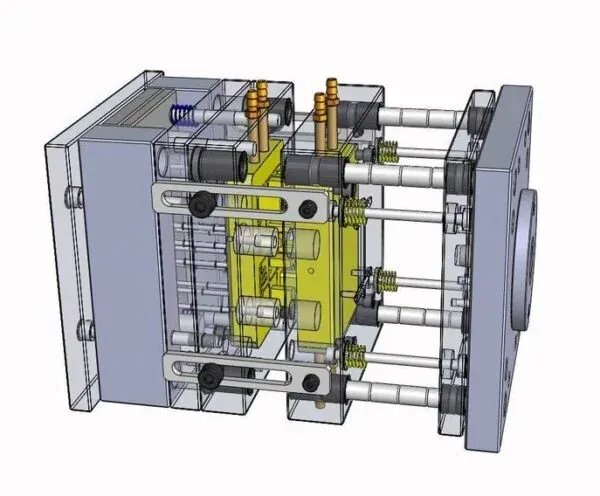
Bob Gray was Tooling Program Manager for a Tier 1 automotive supplier. An Acura MDX interior panel mold had heavy flash along the top edge, caused by an 18-inch slide.
At the landing tool shop in Detroit, the tool shop's general manager chose to adjust the slide wear plates instead of making the changes Bob recommended.
It did not solve the problem. Adjusting the wear plates only moved the flash from the top edge to the bottom edge. It also risked excessive wear and long-term damage to the mold.
Bob refused to approve the change and held to the proper corrective action, even when the decision was escalated. Read the full case study.
What flash at a slide is telling you
Flash is plastic getting into a gap between two steel faces that should be closed. At a slide, those faces have to seat fully when the mold closes and stay seated when the cavity is under injection pressure.
On a long slide, small errors add up along the length. The fit of the shut-off faces, the way the slide is locked when the mold closes, and how well it is supported against cavity pressure all matter. If any of them is not right, plastic finds the gap.
So flash along a slide is a symptom. It says that somewhere the shut-off is not closing, or is not staying closed. The repair has to deal with why.
Why moving the slide moves the flash
Wear plates set where the slide sits. Shift them, and the slide sits in a slightly different place. If the underlying condition has not changed, the gap has not gone away. It has moved.
That is what happened here. The top edge closed up and the bottom edge opened. The defect was the same defect in a new location.
There is a second cost. Forcing a slide to seal by pushing it harder against one side loads the sliding surfaces in a way they were not designed for. That is the excessive wear and long-term damage the case refers to. A tool treated this way may make acceptable parts for a while and then start to flash again, with worn components to replace as well.
How to tell a fix from a relocation
A few questions separate a correction from a workaround.
- Does the change address a cause you can name?
- After the change, is the defect gone everywhere, or just gone from where you were looking?
- Does the change add load, wear or cycle time somewhere else?
- Will it still hold at the end of a long production run, not only on the first shots?
If the honest answer to the first question is no, the others usually follow.
Why shortcuts appear at the end of a build
By the time a tool is at the landing shop, the schedule has little slack left. The launch date is close. The tool is "almost there". A change that takes an afternoon looks much better than one that takes the tool apart.
The shortcut is cheaper on the day. The cost does not disappear. It moves into production, where it is paid in trimming, scrap, wear and downtime, for as long as the tool runs. And it is paid by the molder, not by the shop that made the decision.
Holding the line on approval
An approval is only worth something if it can be withheld. In this case the decision was escalated, and Bob still did not approve the change. A few things make that position easier to hold.
- Acceptance criteria agreed in writing before the tool is built, so "good enough" is not decided under pressure
- Findings documented with parts and photographs, so the discussion is about evidence
- A clear statement of the proper corrective action, and why the shortcut does not solve the problem
- One named person with the authority to approve the tool
The point is not to be difficult. It is that the person approving the tool is the last check before every one of its weaknesses becomes a production problem.
Catch it before steel is cut
Shut-offs, slide locking and slide support can all be checked on the design, long before a tool reaches a landing shop. A mold design and DFM review looks at exactly these details, and a final approval before cutting steel confirms that the open items are closed. A problem found at that stage is a change to a drawing.
The lesson
A fix that relocates a defect is not a fix. Approving shortcuts on tooling costs more in production later.
If you have a tool in design or in build and want an independent opinion before you sign off, start with a free 15-minute call.
Founder of BG Innovations LLC. 45+ years in injection molds, with programs for BMW, Tesla, Honda, GE Appliances and Motorola.